
In today’s dynamic business landscape, companies are purely judged by their accountability, sustainability, and transparency. Stakeholders such as investors, regulators, customers, and even employees are looking at how companies perform on Environmental, Social, and Governance (ESG) parameters. For Indian businesses, this shift underscores the growing importance of ESG reporting.

ESG reporting is the process of disclosing how a company manages environmental impact, social responsibility, and governance practices.
What is ESG reporting?
ESG reporting is the process of disclosing how a company manages environmental impact, social responsibility, and governance practices. It provides a transparent view of a company’s long-term resilience and ethical commitment. With global benchmarks and local mandates evolving, ESG reporting is becoming more than just a compliance requirement, it’s a business imperative.
Why ESG reporting matters for Indian businesses?
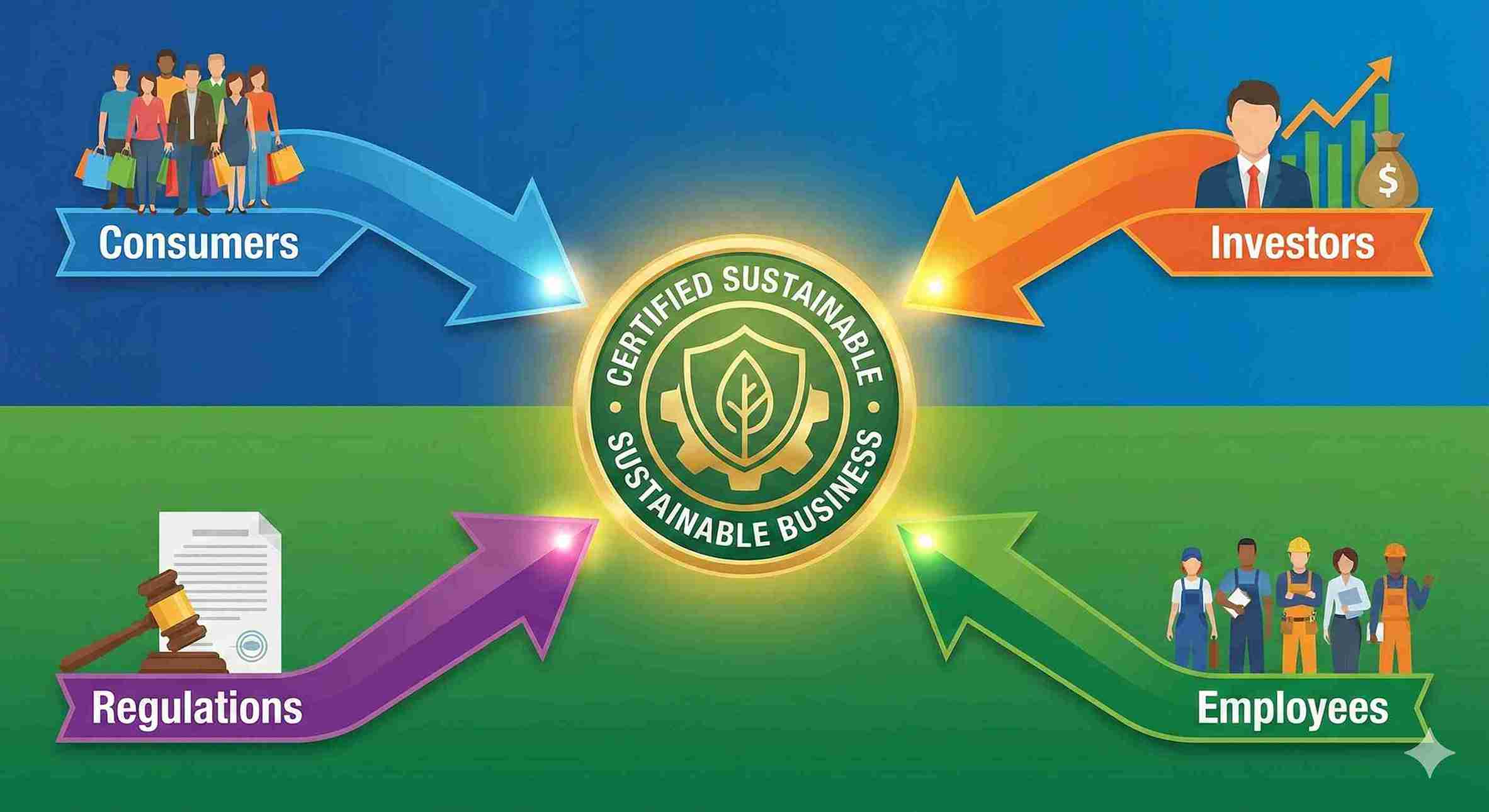
Investor Confidence and Global Capital
Global and domestic investors are keen on understanding ESG performance of a business before making funding decisions. Indian companies aiming to attract foreign direct investment and international collaborations should adopt ESG reporting as it builds trust among investors.
Regulatory Compliance in India
The Securities and Exchange Board of India (SEBI) has already introduced the Business Responsibility and Sustainability Report (BRSR) (SEBI, 2021) for the top listed entities. Adopting ESG reporting and ESG disclosures help Indian businesses navigate the changing regulations and stay ahead of regulatory pressures.
Brand Reputation and Customer Loyalty
Consumers, especially millennials and Gen Z, are making conscious choices. Businesses that openly share their ESG journey gain stronger customer loyalty and a competitive edge in crowded markets.
Operational Efficiency and Risk Management
Adopting ESG practices often uncovers inefficiencies in resource usage, waste management, and supply chain practices. This helps businesses to optimise operational costs and mitigate risks such as climate change disruptions or supply chain vulnerabilities.
Talent Attraction and Retention
A strong ESG focus signals a progressive, ethical, and employee-friendly workplace. Young professionals increasingly seek employers with a commitment to sustainability, inclusivity, and responsible governance.
The Competitive Advantage of Early Adoption
India’s role in global supply chains is rapidly expanding. Multinational corporations are setting strict ESG criteria for their suppliers. Companies that embrace ESG reporting proactively gain a competitive edge over those who treat it as a reactive obligation. Early adopters can shape the narrative, differentiate themselves from slow movers, and build a sustainable growth story that resonates with stakeholders globally.
Conclusion: The Road Ahead
For Indian businesses, ESG reporting is not just about compliance but about future-proofing success. It is the bridge between financial growth and sustainable development. Organisations that embrace transparency, accountability, and ethical responsibility are more likely to thrive in the evolving business ecosystem.
If your business hasn’t started its ESG journey yet, now is the time. Begin assessing your environmental, social, and governance impact today. Partner with us, adopt ESG reporting frameworks, and position your company as a forward-thinking leader. The future belongs to businesses that don’t just grow, but grow responsibly.
References
Business Responsibility and Sustainability Reporting Format (2021).Securities and Exchange Board of India. Available at: https://www.sebi.gov.in/sebi_data/commondocs/may-2021/Business%20responsibility%20and%20sustainability%20reporting%20by%20listed%20entitiesAnnexure1_p.PDF (Accessed on 23/09/2025)