Why the Future May Look Like a Village?
What if the solution to climate change wasn’t bigger cities—but smarter villages?
Today, more than 55% of the world’s population lives in urban areas, a number projected to reach 68% by 2050, according to the United Nations. Cities drive innovation—but they also consume over 75% of global resources and generate more than 70% of carbon emissions. Meanwhile, rural communities often face economic decline, youth migration, and limited infrastructure.
The sustainable village model offers a powerful alternative: self-sustaining communities that produce their own energy, grow local food, manage waste circularly, and build resilient local economies. From eco-villages in Europe to regenerative rural hubs in India, this model is redefining what prosperity looks like.
In this article, we will explore:
- Why our current development model is unsustainable
- Real-world sustainable village solutions
- The barriers ahead—and why the 2030 outlook is promising
Let us reimagine community.
The Problem — A System Under Strain
- Climate Pressure and Resource Depletion
The IPCC warns that we must halve global emissions by 2030 to avoid the worst climate impacts. Yet our current centralized systems such as industrial agriculture, fossil-fuel grids, global supply chains are carbon-intensive and fragile.
Large-scale agriculture including the energy used for food processing and transport alone accounts for nearly 30% of global greenhouse gas emissions, according to the FAO and IPCC. At the same time, soil degradation affects 33% of the world’s land.
- Rural Economic Decline
Ironically, while cities swell, rural areas struggle. In many regions, villages face:
– Youth migration to urban centers
– Lack of local employment
– Poor infrastructure and digital connectivity
In India, for example, rural distress and climate variability have severely impacted farmer incomes. Globally, smallholder farmers, who produce one-third of the world’s food, remain among the most vulnerable to climate change.
- Social Disconnection
Modern urban living has also fragmented communities. A 2021 OECD report on regional well-being found that strong local networks and social capital significantly improve resilience during crises. Yet urban sprawl often weakens these bonds.
In short: our systems are extractive, centralized, and disconnected—from nature and from each other.
The sustainable village model seeks to reverse this trajectory.
What a Self-Sustaining Community Looks Like?
The sustainable village model integrates environmental stewardship, economic resilience, and social cohesion. Let’s explore the core pillars.
- Renewable Energy Microgrids
Decentralized renewable energy systems—solar panels, small wind turbines, biogas digesters—allow villages to produce their own power.
Case Study: In Bangladesh, over six million solar home systems have transformed rural electrification (da Silva, 2026). In Germany, more than 40% of renewable capacity is community-owned (Appunn, 2021).
Pros:
- Energy independence
- Lower long-term costs
- Reduced emissions
Cons:
- High upfront investment
- Requires technical training
Actionable Step: Communities can form energy cooperatives to pool funding and access government subsidies.
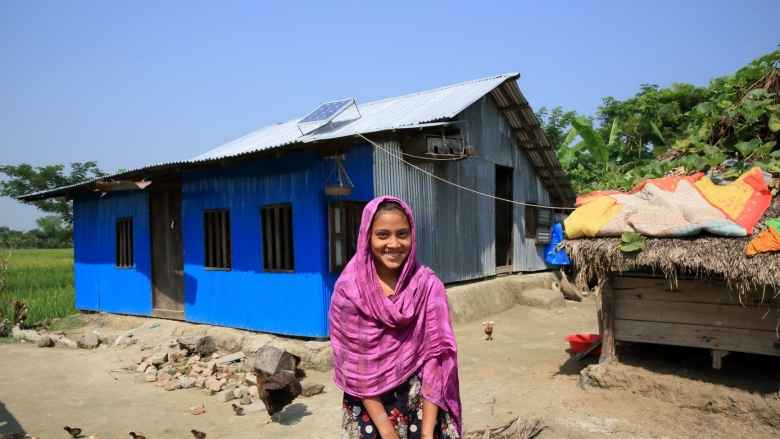
Solar panel installed in a rural village (World Bank Group, 2021)
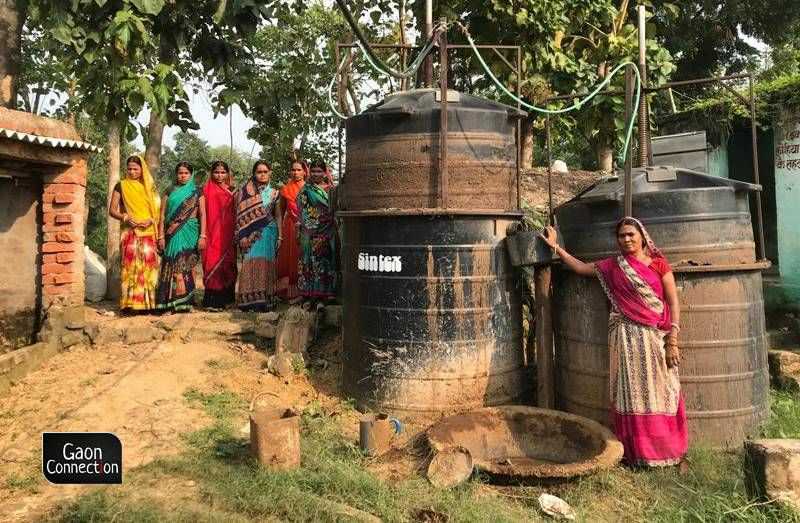
Biogas digester in an Indian village owned by a Self-Help Group (Indian Biogas Association, 2022)
- Regenerative Local Food Systems
Instead of monoculture farming, sustainable villages embrace regenerative practices—crop rotation, agroforestry, composting, and water harvesting.
According to Project Drawdown, regenerative agriculture is one of the most powerful climate solutions available today.
Case Study: In Andhra Pradesh, India, Community-Managed Natural Farming has reduced input costs for farmers while restoring soil health across millions of hectares (Climate Champions, 2024).
Pros:
- Improved soil fertility
- Increased farmer income
- Enhanced food security
Cons:
- Transition period may reduce yields initially
- Requires training and community buy-in
Actionable Step: Start a community-supported agriculture (CSA) program to connect farmers directly with residents.
- Circular Waste & Water Systems
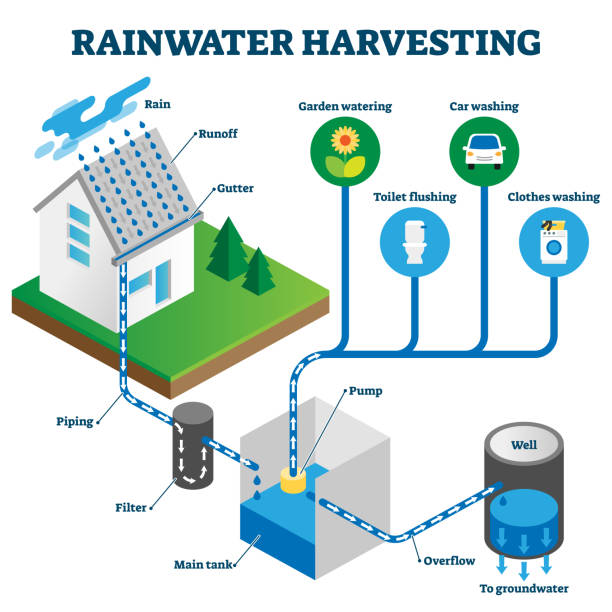
Waste becomes resource in a sustainable village.
Organic waste → compost or biogas
Greywater → treated through constructed wetlands
Rainwater → harvested for irrigation
The UNEP emphasizes circular economy approaches as critical for reducing material extraction and pollution.
Pros:
- Lower landfill dependency
- Water resilience in drought-prone areas
- Reduced contamination
Cons:
- Maintenance requirements
- Behavioral change needed
Actionable Step: Implement decentralized composting hubs and rainwater harvesting systems.
- Local Economies & Social Enterprises
A self-sustaining community is not just ecological—it’s economic. Village-based enterprises can include: Handicrafts and artisanal goods, Food processing units, Eco-tourism, Digital freelancing hubs, etc.
Pros:
- Local job creation
- Reduced migration
- Stronger social cohesion
Cons:
- Market access challenges
- Need for digital infrastructure
Actionable Step: Support skill-building programs and digital literacy to expand rural market reach.
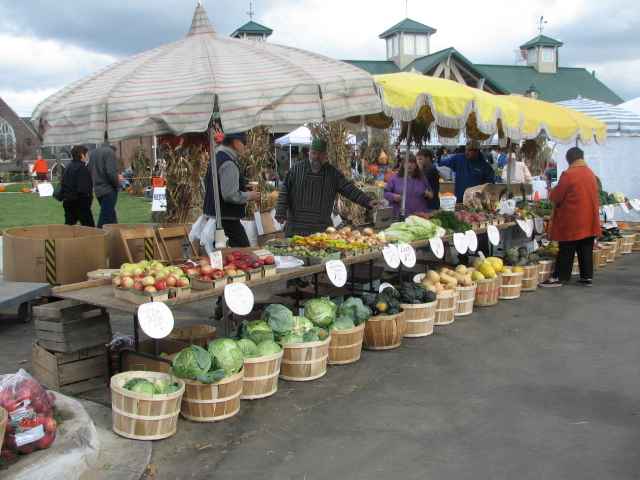
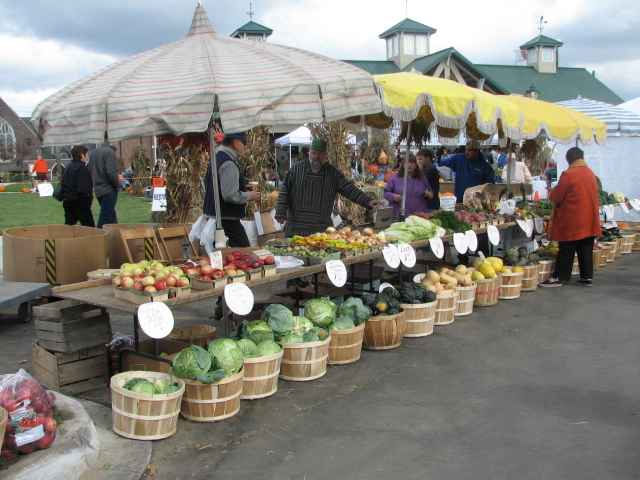
A Farmers’ Market (Source: Wikipedia)
Challenges and Future Outlook
Transitioning to a sustainable village model is not without hurdles.
Key Barriers:
- Policy misalignment favoring centralized systems
- Financing gaps for small-scale infrastructure
- Limited technical capacity
However, the tide is turning. The European Union’s Green Deal, India’s push for renewable rural electrification, and global ESG investment trends are accelerating decentralized development.
By 2030, we could see:
- Smart villages powered by microgrids
- Carbon-negative rural communities
- Hybrid rural-digital economies
The future is not about abandoning cities—it’s about rebalancing development. And villages may lead the way.
Reclaiming the Power of Community
The sustainable village model reminds us of something simple yet radical: communities can meet their own needs without exhausting the planet.
We explored:
- Why centralized systems are failing
- How renewable energy, regenerative farming, circular systems, and local enterprises can rebuild resilience
- The barriers—and the hopeful trends toward 2030
This is not nostalgia. It is innovation rooted in wisdom.
3 Ways You Can Support Sustainable Villages Today:
- Buy from local farmers or join a CSA.
- Advocate for decentralized renewable energy in your region.
- Support or invest in rural social enterprises.
Self-sustaining communities are not utopian; they are already emerging worldwide.
What would a sustainable village look like in your region? Share your thoughts in the comments—and if this inspired you, pass it along.
Resources
Appunn, K. (15/01/2021). ‘Share of private individuals involved in renewables production falls in Germany’. Clean Energy Wire. Available at: https://www.cleanenergywire.org/news/share-private-individuals-involved-renewables-production-falls-germany
Climate Champions (4/11/2024). ‘Assessing natural farming through a wider lens: insights from India’. Climate High-Level Champions. Available at: https://www.climatechampions.net/news/assessing-natural-farming-through-a-wider-lens-insights-from-india/#:~:text=APCNF%20farmers%20experienced%20a%2049,using%20chemically%2Dintensive%20farming%20methods.
da Silva, F. A. (3/2/2026). ‘Energy revolution in one of the world’s poorest countries gains scale: Bangladesh installs more than 6 million solar systems, brings clean electricity to the countryside and cuts 2,5 million tons of CO₂ per year’. CPG. Available at: https://en.clickpetroleoegas.com.br/Bangladesh-surpasses-6-million-domestic-solar-systems–bringing-clean-energy-to-rural-areas-and-reducing-CO%E2%82%82-emissions-by-25-million-tons-per-year./
Indian Biogas Association (19/2/2022). Rural employment generation through biogas production in villages of India. Available at: https://biogas-india.com/rural-employment-generation-through-biogas-production-in-villages-of-india/
World Bank Group (8/4/2021). A Game-changer in Bangladesh’s Growth Story: Solar Home Systems. Available at: https://www.worldbank.org/en/news/feature/2021/04/08/a-game-changer-in-bangladesh-growth-story-solar-home-systems